Introduction
Jeff Nippard is a Canadian natural bodybuilder, powerlifter, and fitness educator who has built one of the largest science-based fitness platforms on YouTube. Standing at 5’5” with over 15 years of training experience, Nippard won gold at Canadian natural bodybuilding Nationals and has competed in powerlifting with notable lifts including a 480lb squat, 380lb bench press, and 530lb deadlift. His approach combines peer-reviewed research with practical bodybuilding experience, making complex exercise science accessible to everyday lifters. What distinguishes his content is his willingness to update his positions as new research emerges and his commitment to conducting his own research studies.
Core Beliefs
Training Intensity and Failure
- [mentioned in 35/45 videos] ★ Training close to failure is essential for muscle growth. Most sets should be within 1-3 reps of failure, with the last set of each exercise taken all the way to failure.
- [mentioned in 28/45 videos] ★ The negative (eccentric) portion of the lift matters most for hypertrophy. Control the weight for 2-4 seconds on the way down rather than letting it freefall.
- [mentioned in 22/45 videos] Most people in commercial gyms don’t train hard enough - studies show 47% of lifters leave 6+ reps in the tank when they think they’re at failure.
The Stretch Position
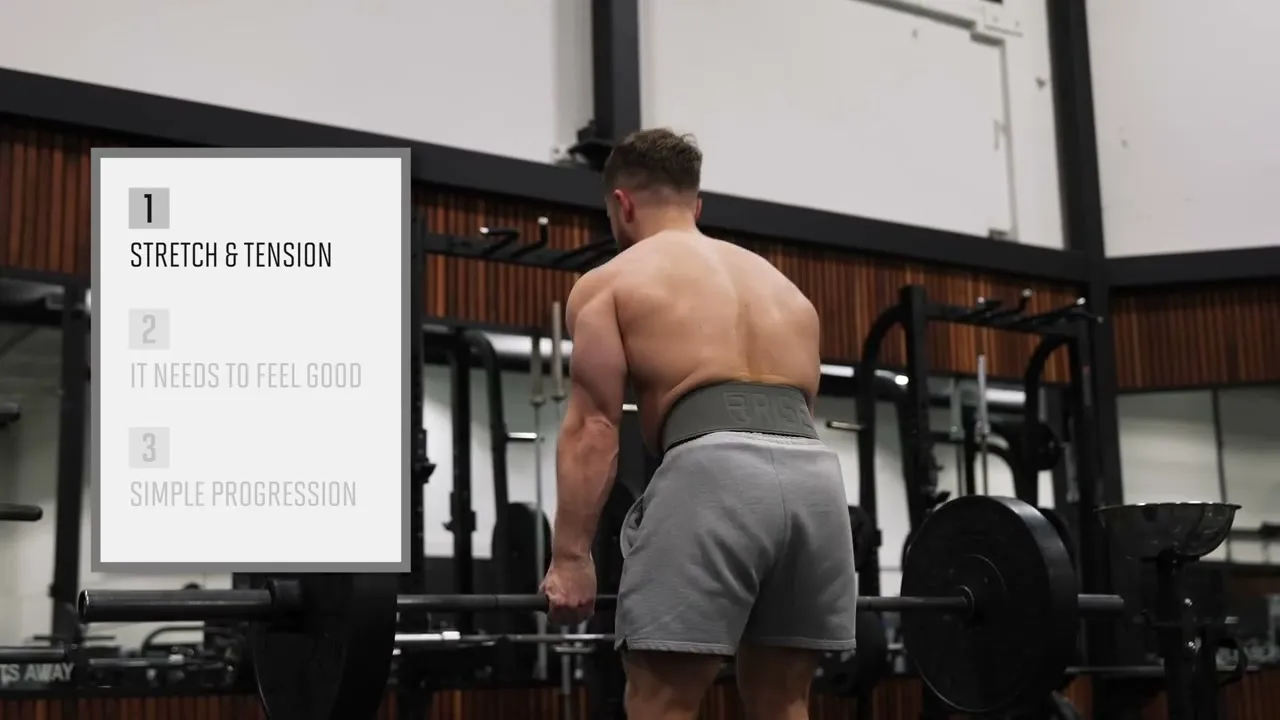
- [mentioned in 30/45 videos] ★ The stretched portion of an exercise is more important for muscle growth than the contracted/squeezed portion. This has become a central theme in his recent content.
- [mentioned in 18/45 videos] Exercises that load muscles in lengthened positions tend to produce superior hypertrophy results. Examples include incline curls for biceps and seated leg curls for hamstrings.
- [mentioned in 12/45 videos] His own research found that lengthened partials can produce similar gains to full range of motion in trained lifters - suggesting you can cut the “squeeze” portion without losing gains.
Progressive Overload
- [mentioned in 32/45 videos] ★ Progressive overload is non-negotiable for continued muscle growth. You must add weight, reps, or improve technique over time.
- [mentioned in 20/45 videos] Tracking workouts is essential - without records, you can’t ensure you’re actually progressing.
- [mentioned in 15/45 videos] If you can’t add weight or reps, focus on improving range of motion or mind-muscle connection as alternative forms of progression.
Training Volume
- [mentioned in 25/45 videos] ★ Optimal volume for most muscles is 10-20 hard sets per week, with diminishing returns above that.
- [mentioned in 18/45 videos] Per-session volume should cap around 6-8 sets per muscle group - beyond that, sets become “junk volume” with minimal additional benefit.
- [mentioned in 14/45 videos] Different muscles tolerate different volumes - back, quads, and glutes can handle more (10-12 sets per session), while smaller muscles max out at 6-8.
Diet and Fat Loss
- [mentioned in 28/45 videos] ★ Fat loss comes down to a caloric deficit - you cannot out-train a bad diet. Cardio burns far fewer calories than most people think.
- [mentioned in 22/45 videos] ★ Protein intake should be 0.7-1g per pound of bodyweight for muscle building. Higher isn’t necessary and won’t produce additional gains.
- [mentioned in 18/45 videos] For sustainable fat loss, aim to lose 0.5-1% of bodyweight per week. More aggressive cuts lead to muscle loss and metabolic adaptation.
- [mentioned in 15/45 videos] Clean eating is overrated - what matters is hitting calorie and protein targets. Flexible dieting produces better long-term adherence than rigid food rules.
Exercise Selection
- [mentioned in 30/45 videos] ★ Choose exercises based on three criteria: high tension (especially in the stretch), smooth feel without pain, and ability to progressively overload.
- [mentioned in 22/45 videos] Machines and cables are at least as effective as free weights for hypertrophy, often with better stimulus-to-fatigue ratios.
- [mentioned in 18/45 videos] Exercise variety matters - hitting muscles from different angles and using varied rep ranges produces better overall development.
Key Advice
- [mentioned in 35/45 videos] ★ Take the last set of every exercise to failure - this ensures maximum muscle fiber recruitment.
- [mentioned in 30/45 videos] ★ Control the negative for 2-4 seconds - the eccentric is where most growth stimulus occurs.
- [mentioned in 28/45 videos] ★ Prioritize the stretched position - choose exercises and execute reps to maximize tension when muscles are lengthened.
- [mentioned in 25/45 videos] ★ Track your calories and protein using an app - intuitive eating fails most people.
- [mentioned in 22/45 videos] Use straps on back exercises - don’t let grip limit your back development.
- [mentioned in 20/45 videos] Hit each muscle at least twice per week - bro splits that train muscles once weekly are suboptimal.
- [mentioned in 18/45 videos] Take creatine monohydrate (5g daily) - it’s the most effective legal supplement, adding 2-3 lbs of lean mass.
- [mentioned in 15/45 videos] For fat loss, use diet as the primary tool and cardio as supplementary - energy compensation reduces cardio’s effectiveness by about 28%.
- [mentioned in 12/45 videos] Include diet breaks every 2-3 months when cutting - eating at maintenance for 2-3 weeks improves subsequent fat loss.
Common Misconceptions They Address
- Misconception: You need to eat clean to lose fat → Reality: [mentioned in 18/45 videos] Total calories and protein matter most; flexible dieting produces equal or better results with superior adherence.
- Misconception: Meal timing and frequency matter significantly → Reality: [mentioned in 15/45 videos] For fat loss, 1-6 meals per day works equally well. For muscle gain, 3-6 protein-containing meals is slightly better than 1-2.
- Misconception: Fasted cardio burns more fat → Reality: [mentioned in 8/45 videos] Research shows no difference in fat loss between fasted and fed cardio when calories are equated.
- Misconception: Steroids are needed to build an impressive physique → Reality: [mentioned in 12/45 videos] Natural lifters can gain 20-40 lbs of muscle over their lifting career; steroids roughly double or triple this but come with significant health risks.
- Misconception: The pump indicates a good workout → Reality: [mentioned in 10/45 videos] Pump correlates weakly with hypertrophy; mechanical tension is far more important.
- Misconception: You must use heavy weights and low reps for strength, light weights for size → Reality: [mentioned in 15/45 videos] Muscle growth occurs across rep ranges (roughly 5-30 reps) as long as sets approach failure.
- Misconception: Ab exercises burn belly fat → Reality: [mentioned in 8/45 videos] Spot reduction doesn’t exist; visible abs require getting to 10-15% body fat for men through a caloric deficit.

Who Should Follow This Creator
Ideal audience:
- Intermediate to advanced lifters who want evidence-based training guidance
- People frustrated with conflicting fitness advice who want clarity backed by research
- Those willing to track workouts and nutrition for optimal results
- Natural lifters seeking realistic expectations and sustainable approaches
May not be ideal for:
- Complete beginners who might be overwhelmed by the detail (though his fundamentals program addresses this)
- Those seeking quick fixes or miracle solutions
- People who prefer purely intuitive approaches to training and eating
Content Style
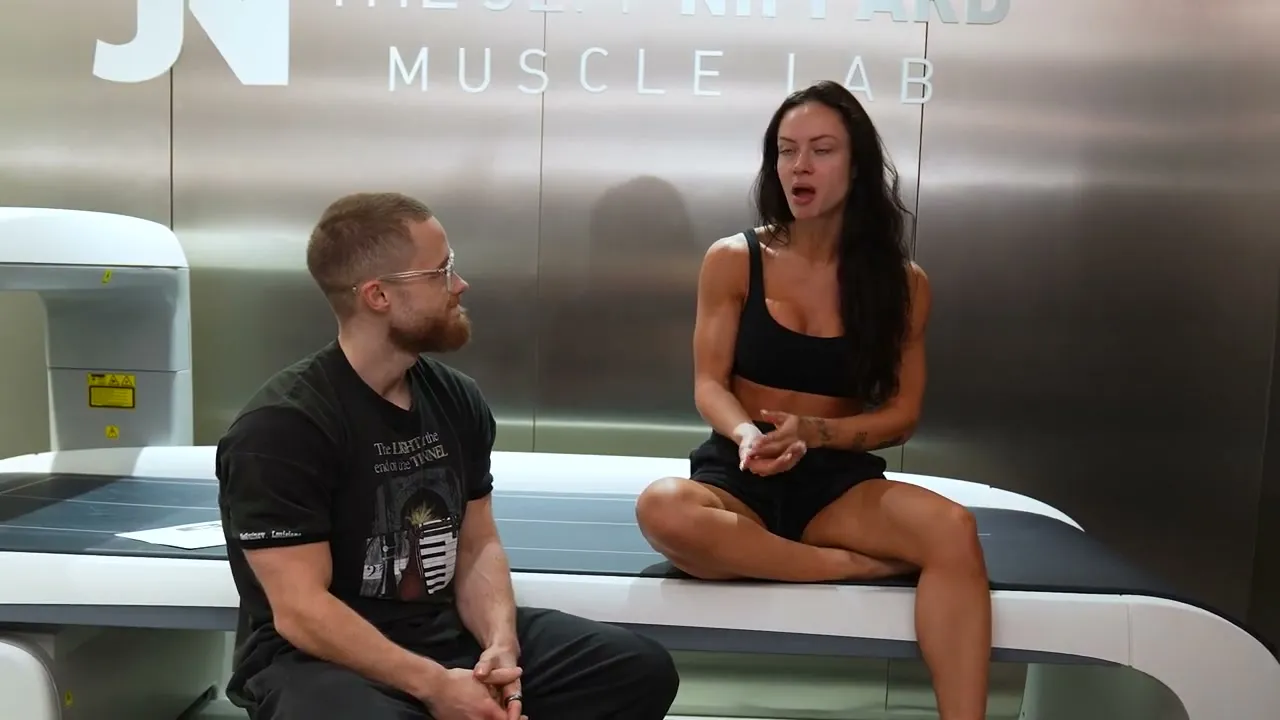
Nippard’s videos are highly produced with clean graphics, research citations displayed on screen, and clear visual demonstrations. He frequently references peer-reviewed studies, often showing the actual papers and explaining methodology. His presentation style is educational and measured - he avoids sensationalism and acknowledges when evidence is conflicting or evolving. Videos typically run 10-15 minutes and follow structured formats like tier lists, workout breakdowns, or myth-busting segments. He regularly collaborates with other experts (Dr. Mike Israetel, Eric Helms, Brad Schoenfeld) and updates his positions when new research emerges. Recently, he’s begun conducting his own research studies, including building a dedicated muscle research lab facility.









![Thumbnail for The Ultimate Push Workout For Muscle Growth [Chest, Shoulders, Triceps] (2023)](https://i.ytimg.com/vi/c3pbe3qzatQ/hqdefault.jpg)


![Thumbnail for The Ultimate PULL Workout For Muscle Growth [Back, Biceps, Rear Delts] (2023)](https://i.ytimg.com/vi/spKGN0XzErU/hqdefault.jpg)